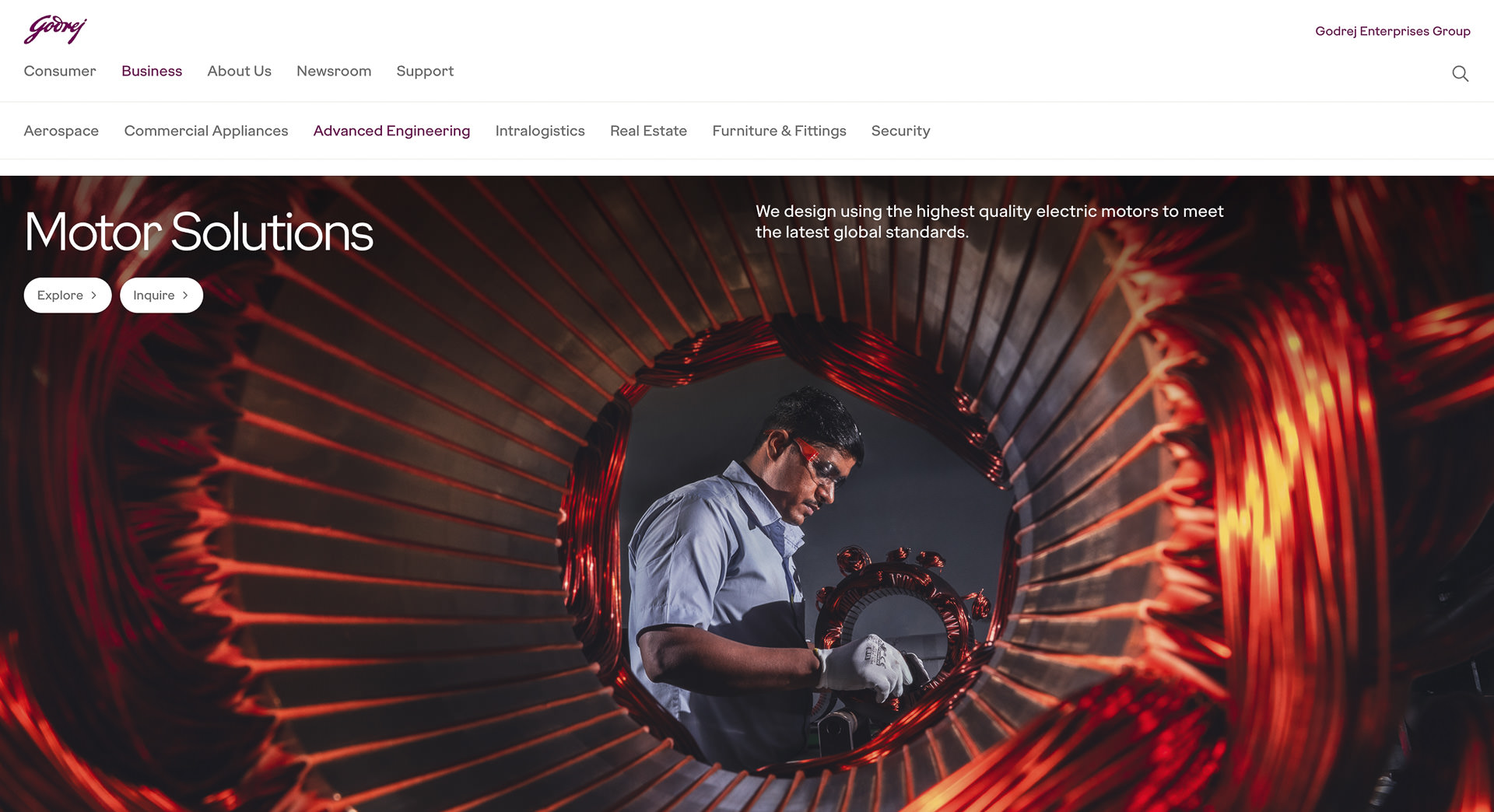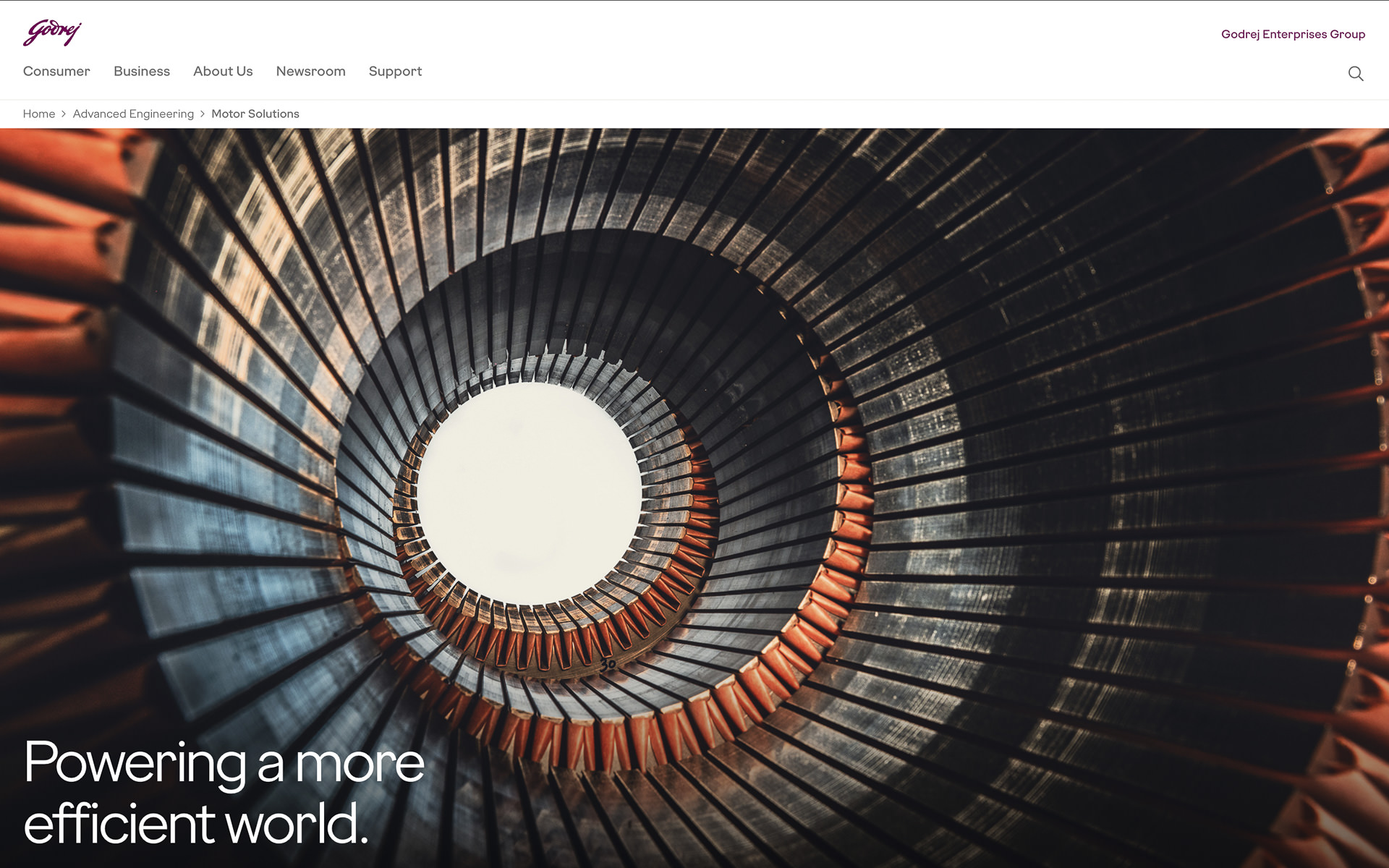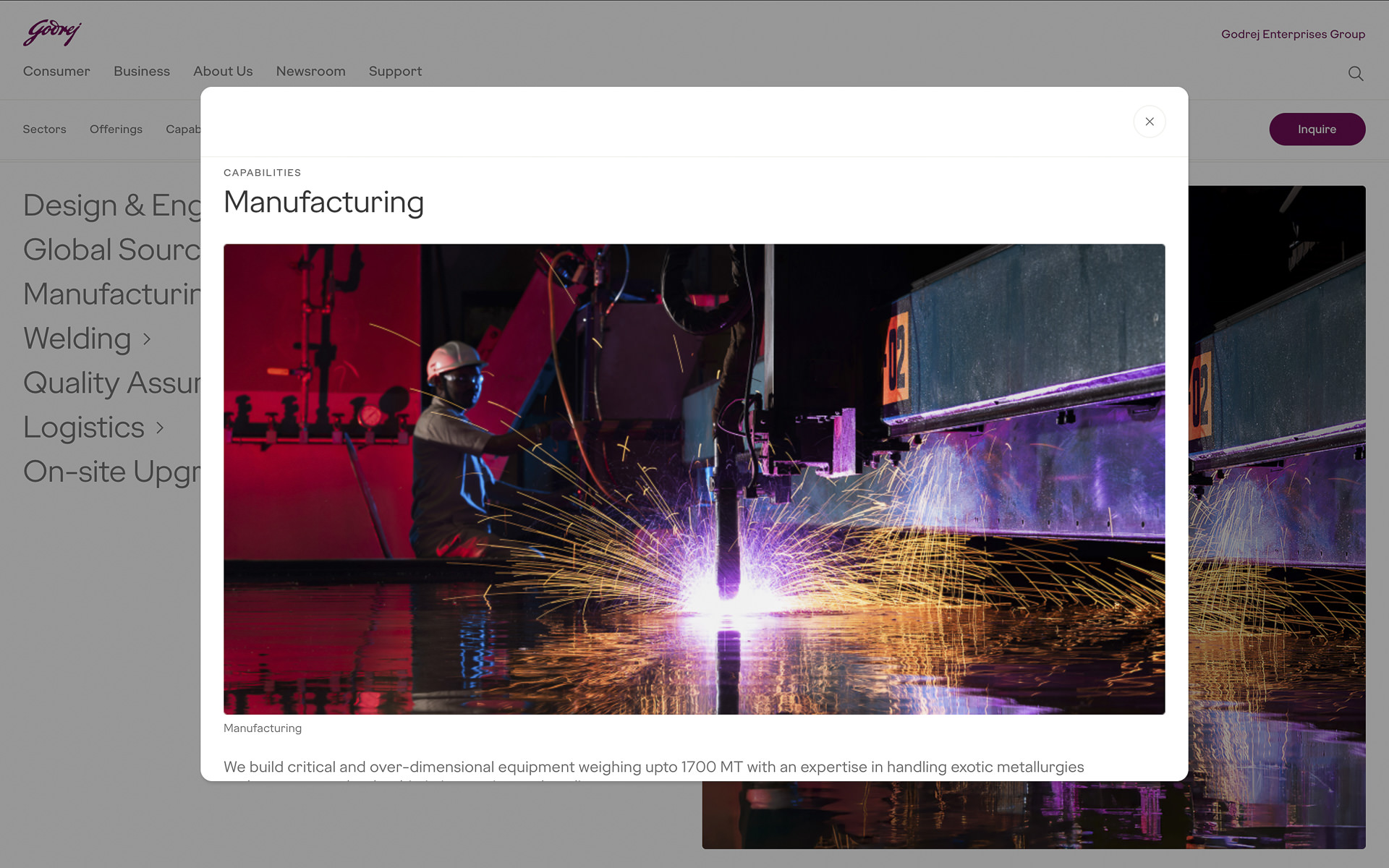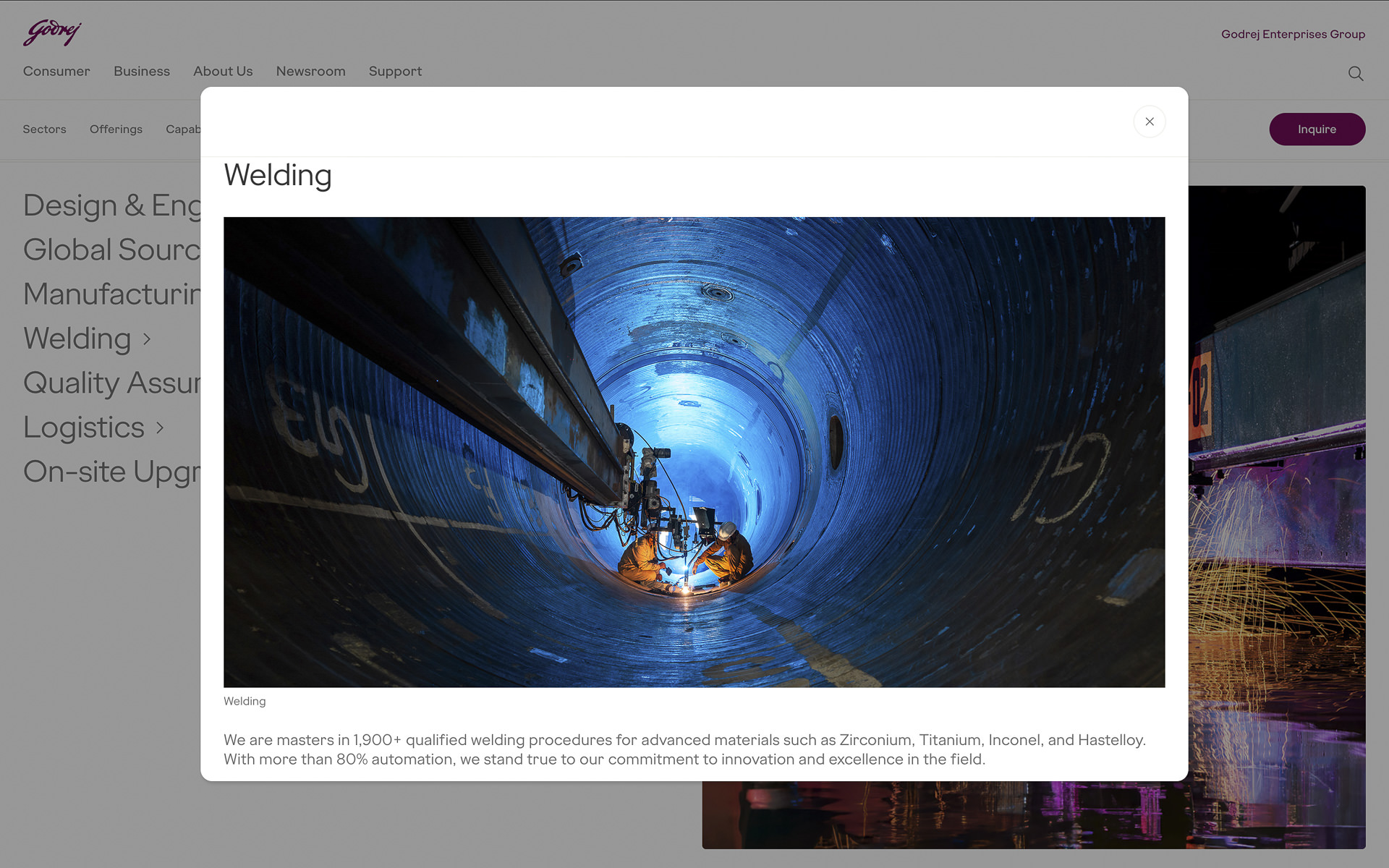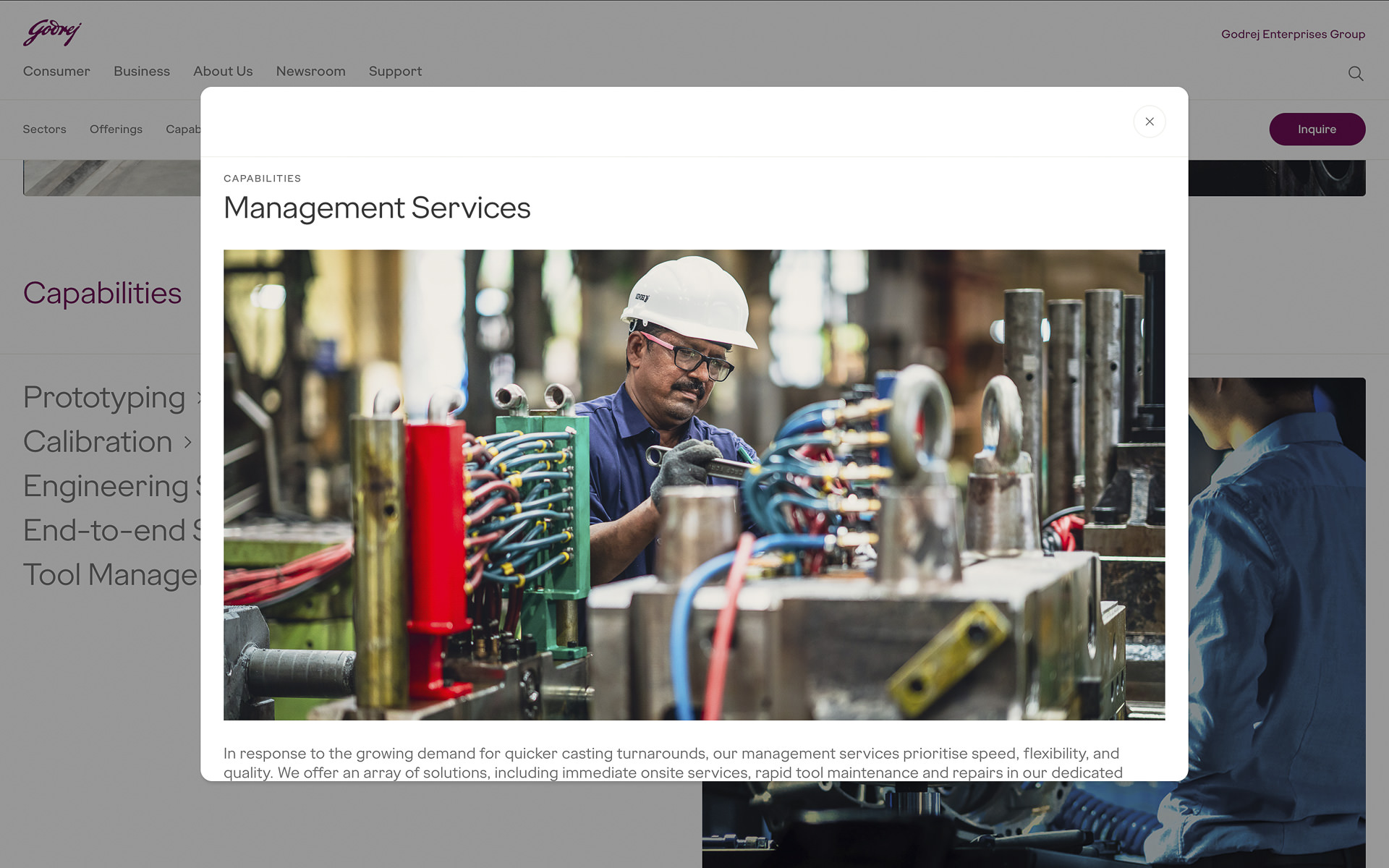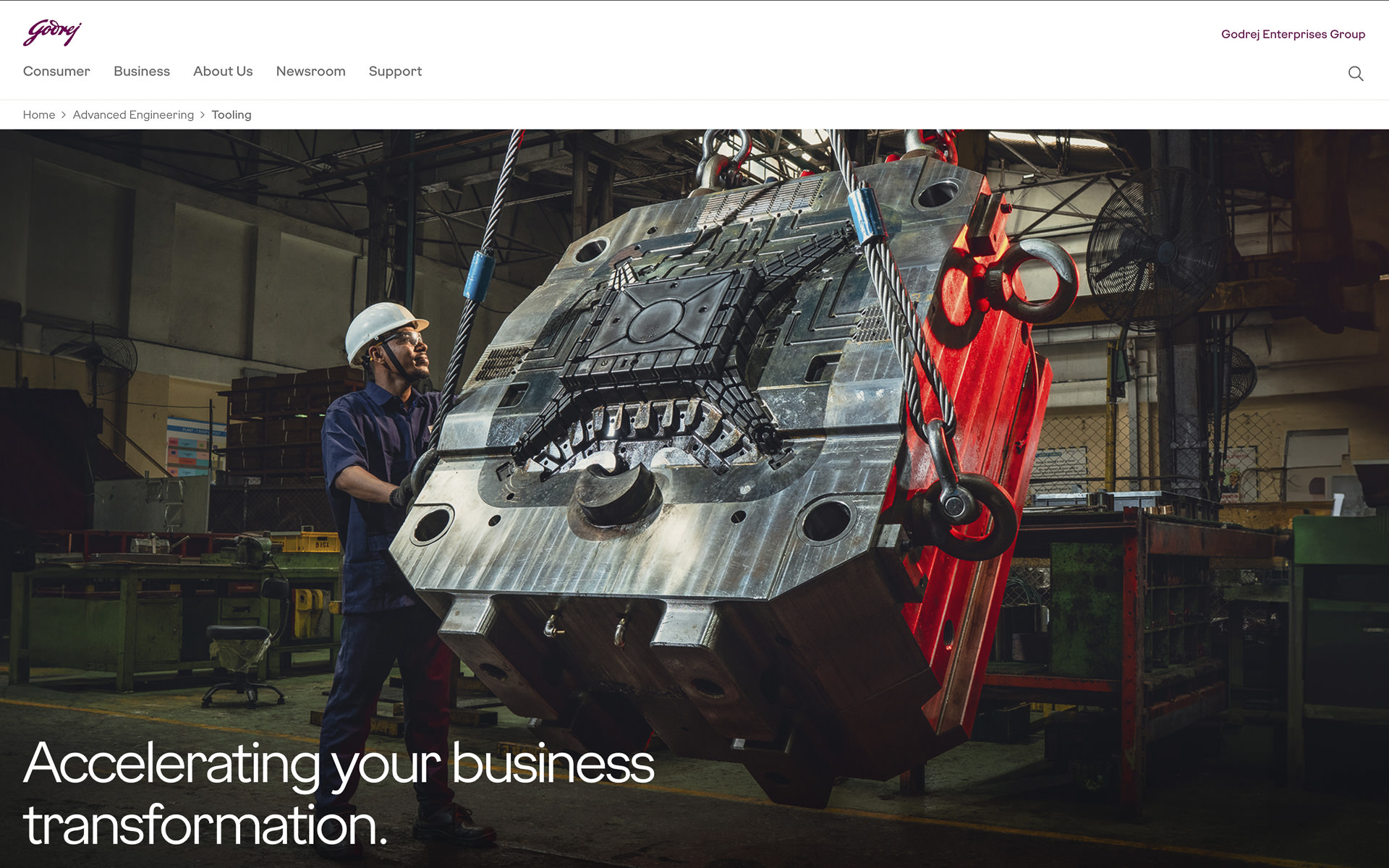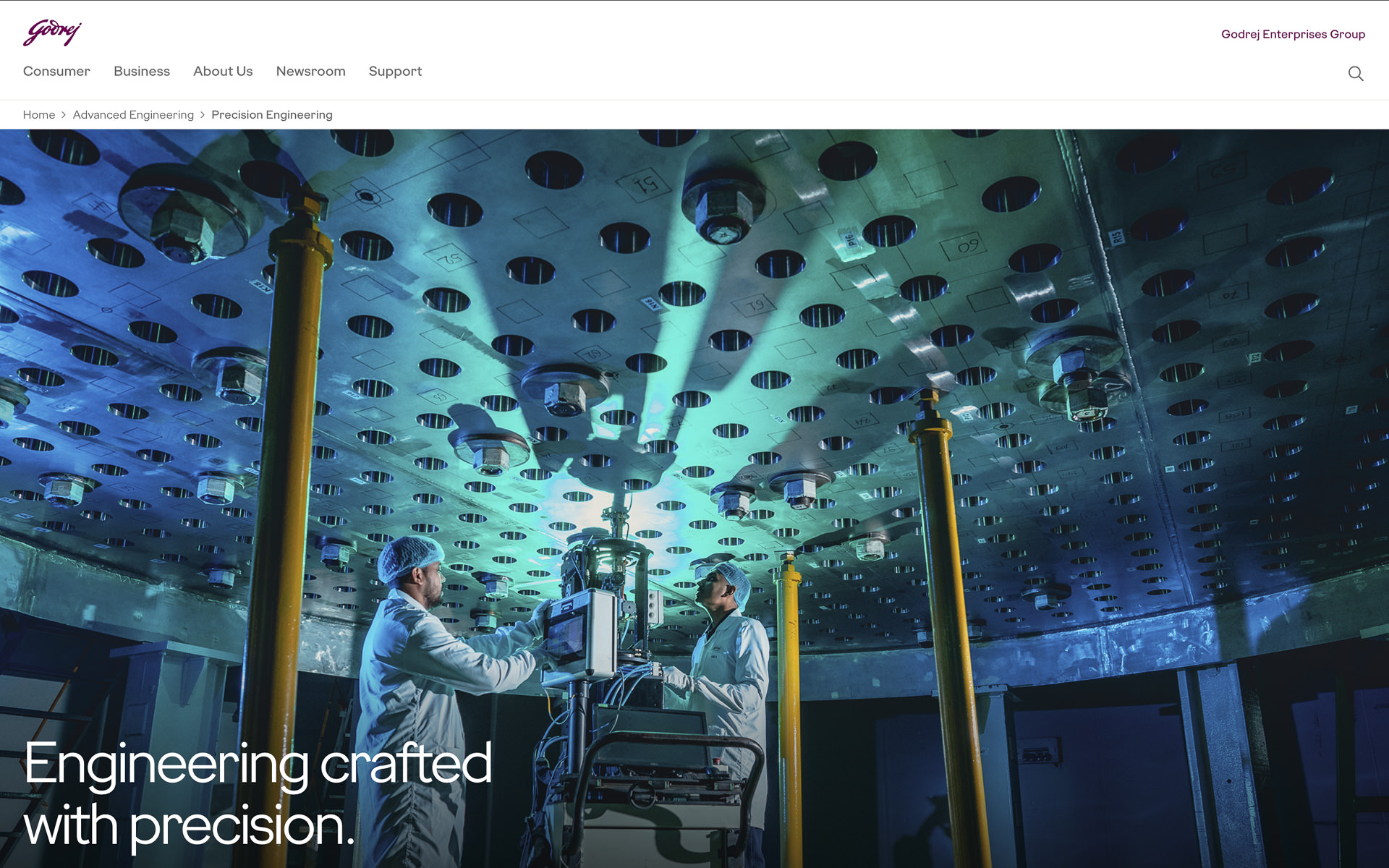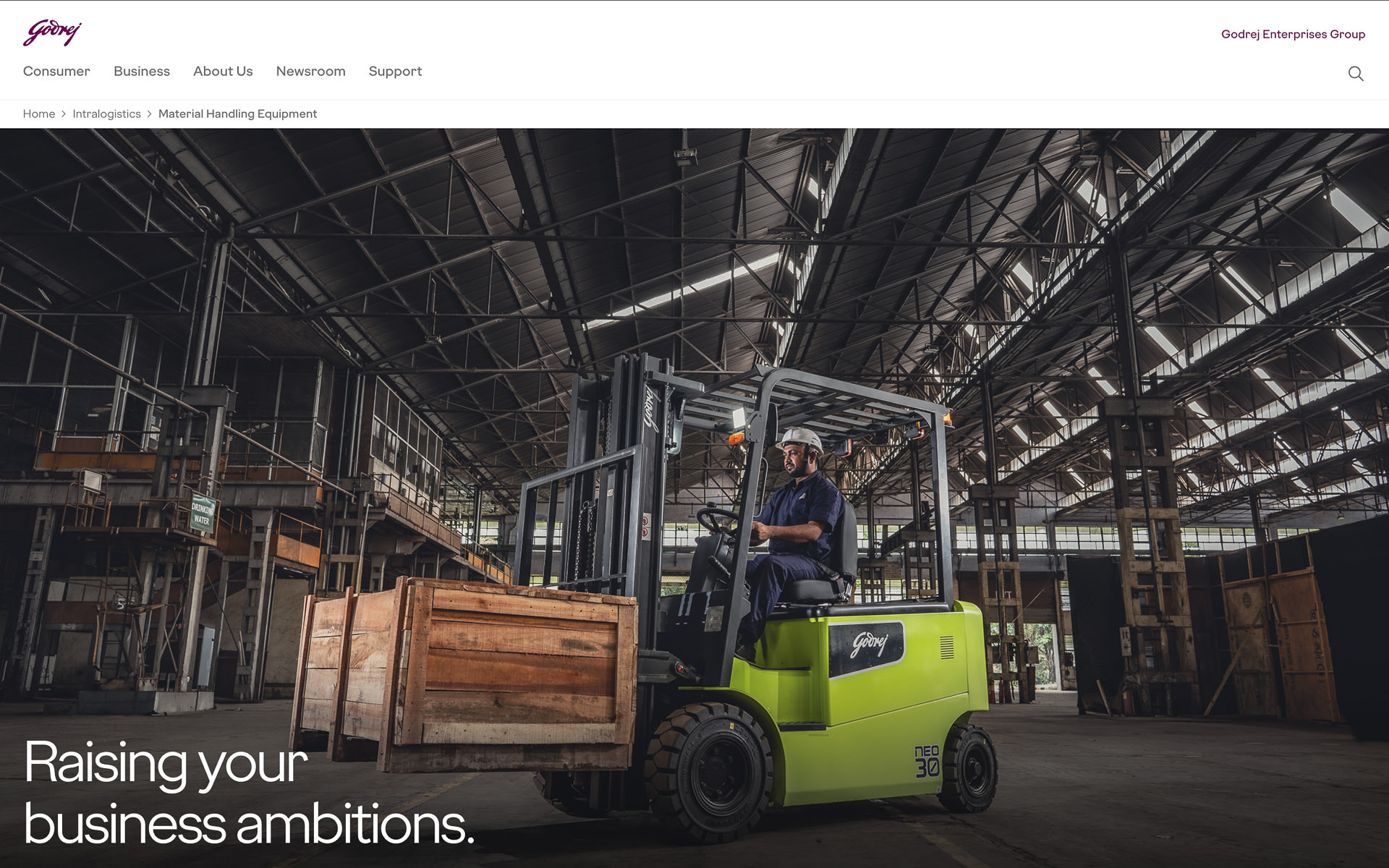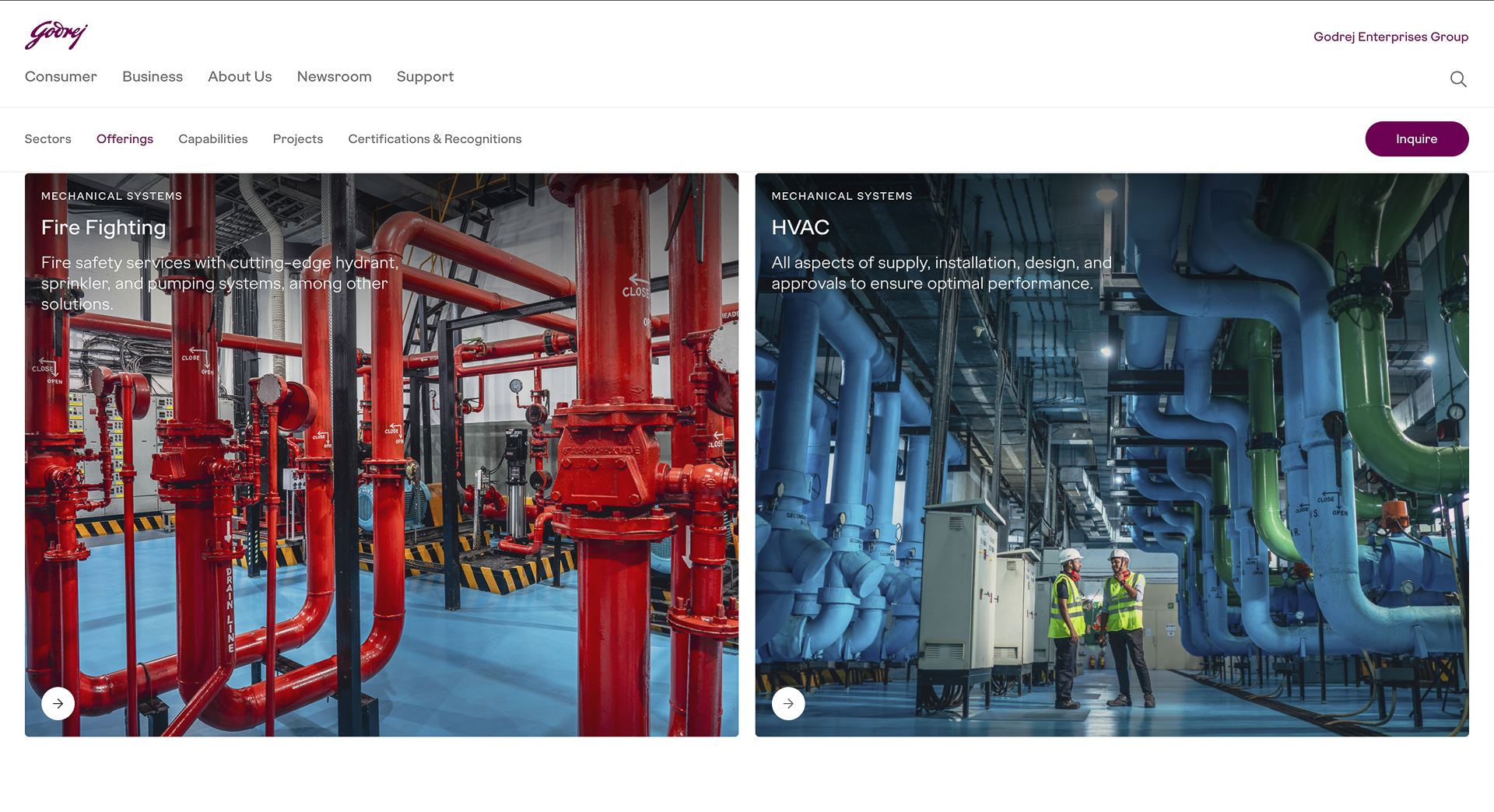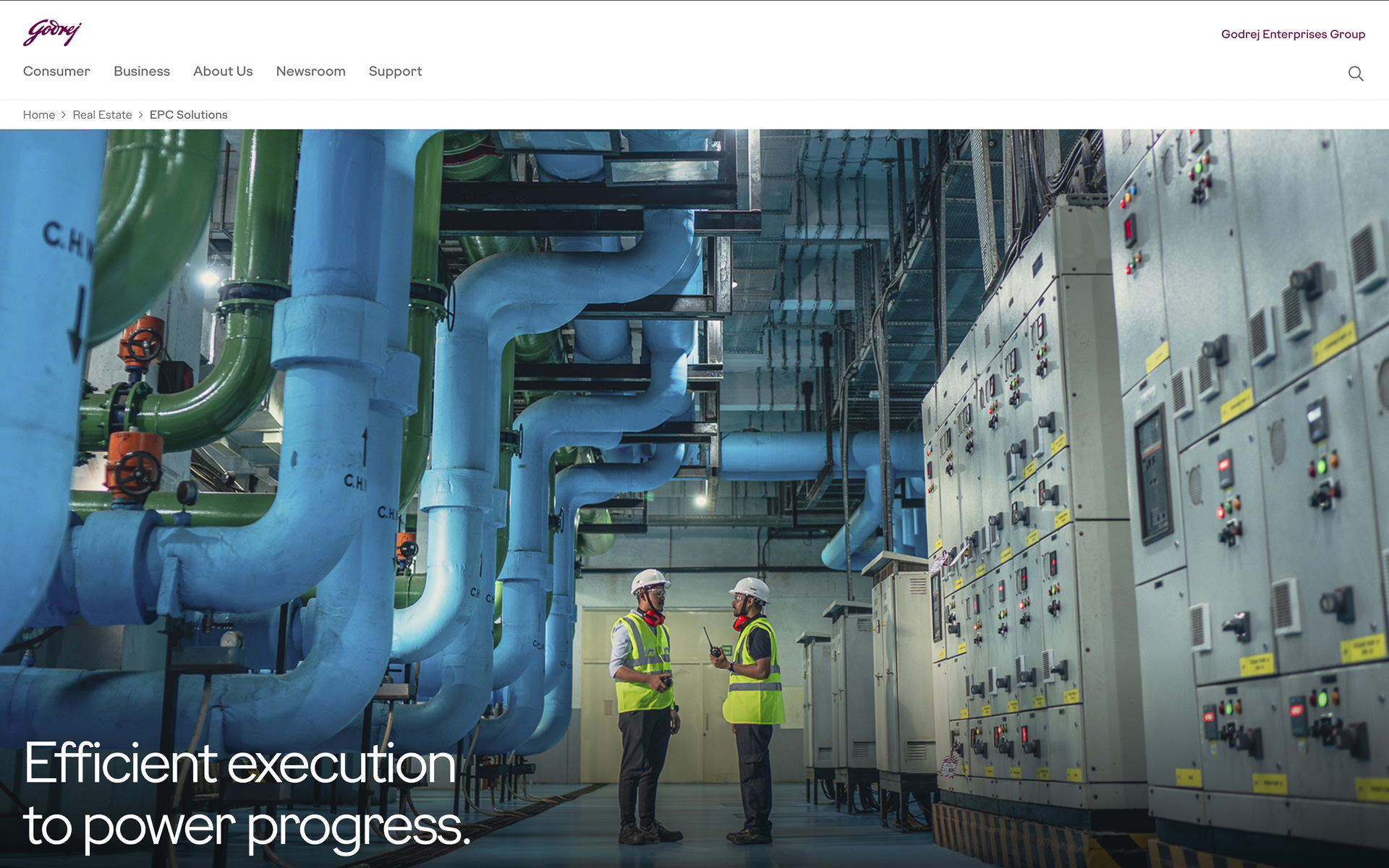
When Godrej Enterprises embarked on a major rebrand, they needed new imagery to reflect the scale, innovation, and human spirit behind their operations.
Over the course of one month, I worked inside their factories across India, documenting everything from steel production lines to the people who keep them running. The goal was not just to create striking visuals, but to help reposition Godrej’s brand narrative for a global audience.
The resulting library of images now anchors the company’s new website, annual reports, and communications campaigns. By combining technical precision with creative storytelling, we produced photographs that highlight both the strength of their industry and the values driving their future.
Project Highlights
•Scope: Nationwide industrial photography campaign across multiple Godrej factories
•Locations: Multiple factories, R&D facilities, offices, and infrastructure sites across India
•Duration: 30 days on-site
•Deliverables: Comprehensive image library for corporate communications and digital platforms
•Impact: Core visual assets for Godrej’s global rebranding launch
Industrial Photography for Factories at Scale
This was not a typical factory photography assignment. The project involved a 30-day industrial photography production across multiple manufacturing facilities in India.
Scope of Work
- industrial photographer for factories across diverse environments
- Documentation of production lines, machinery, and workforce
- Creation of a unified visual language for brand communication
- Photography for corporate, marketing, and internal use
Challenges of Industrial Photography in Active Manufacturing Environments
Being an Industrial photographer for factories comes with unique constraints that require experience, precision, and adaptability.
Working in Live Production Facilities
All photography was conducted in fully operational factories without disrupting workflow. This required:
- Coordination with plant managers and safety teams
- Understanding manufacturing processes before shooting
- Adapting to fast-changing industrial conditions
Safety and Access
Factory photography demands strict adherence to safety protocols. Every location required planning around:
- Protective equipment
- Restricted zones
- Movement within heavy industrial environments
Building a Visual Identity Through Industrial Photography
The goal of this industrial photography project was not just documentation, but creating a strong and consistent visual identity for Godrej Enterprises.
From Documentation to Brand Language
Industrial photographer for factories plays a critical role in shaping how manufacturing companies present themselves across marketing, corporate communication and global brand positioning. Industrial photography for factories is not just about documentation. It is about creating a clear, structured and consistent visual language that reflects scale, precision and operational excellence across manufacturing environments. In this project, the focus was on delivering industrial photography for factories that translates complex production processes into strong, usable visual assets:
- Clean, structured compositions that bring order to visually complex factory settings
- Human presence within industrial environments to add context, scale and connection
- Emphasising the scale and precision of manufacturing processes across facilities
- Capturing machinery, workflows and production lines with clarity and consistency
- Creating a cohesive visual language for use across branding, marketing and corporate communication
Consistency Across Locations
With multiple factories involved, maintaining visual consistency was essential. This ensured that all images could work together across:
- Corporate websites
- Annual reports
- Brand campaigns
- Internal communications
Results of the Factory Photography Project
The final industrial photography output became a core part of Godrej Enterprises’ rebranding and communication strategy.
- A complete image library for factory and manufacturing visuals
- Consistent visual identity across all industrial divisions
- High-quality assets for global brand communication
This is the value of working with an experienced photographer for industrial factories who understands both production environments and brand requirements.
Why An Industrial Photographer Matters for Factories
Industrial photography is no longer just documentation. For manufacturing companies, it is a strategic tool.
Key Benefits
- Builds trust and transparency
- Strengthens brand positioning
- Communicates scale and capability
- Supports marketing and corporate communication
Companies investing in industrial photography for factories gain a competitive advantage through strong, authentic visual storytelling.
Hire an Photographer for an Industrial Factory Shoot in India
If your company operates in manufacturing, infrastructure, or industrial production, investing in professional industrial photography is essential.
As a photographer with over 35 years of experience, I provide industrial photography for factories, manufacturing plants and production environments, helping corporations and global brands create powerful visual assets for marketing and communication.
Related Industrial Photography Projects
Explore more industrial photography and manufacturing environments across India:
What is industrial photography for factories?
ndustrial photography for factories involves capturing manufacturing processes, machinery, and workforce in real production environments to support branding, communication, and documentation.
How much does industrial photography cost in India?
Costs vary depending on project scope, number of locations, and production requirements. Large-scale factory photography projects typically involve multi-day shoots and full production planning.
How long does a factory photography project take?
Projects can range from a single day to several weeks, depending on the scale of the manufacturing operations and the required image library.
Looking Ahead
This assignment represents Phase One of a long-term visual transformation.
Phase Two begins shortly, continuing to build a unified visual language across the organisation’s expanding footprint.
For a company of this scale, imagery is not a one-off exercise—it’s an evolving system.