What Permissions Are Required for Factory Photography in India?
Factory Photography Permissions Are Layered, Not Singular
Corporate and Senior Management Approval
Permission usually begins at the corporate or senior management level. This establishes intent: why factory photography is being commissioned, how the images will be used, and which facilities are involved. Without this alignment, access at plant level rarely materialises. In larger manufacturing groups, this approval often sits with corporate communications or senior operations rather than the factory itself.
Plant-Level Authority and Safety Clearance
Once this approval is in place, authority shifts to the plant and safety teams. At this stage, photography becomes conditional. Site-specific safety inductions are standard, defining mandatory protective equipment, restricted zones, escort requirements, and movement limitations. For a factory photographer, this is where theory meets operational reality. Photography is approved not in principle, but within clearly defined boundaries.
In practice, factory photography in India requires alignment between corporate intent, plant authority, and on-ground safety teams.
In large multinational organisations, permissions are often shaped as much by legal and administrative requirements as by operational reality. Entry forms, declarations, and compliance documents may need to be completed by specific contracting entities rather than by the photographer personally. In these situations, even when access is approved in principle, progress can stall while responsibilities move between agencies, legal teams, and internal stakeholders. For factory photography, this layer of formality is not an exception — it is a recurring part of working with global manufacturing brands.
Understanding who is legally authorised to complete which documents — and allowing time for that process — is often as critical as securing site access itself.
Safety, Access, and Movement Inside Live Factories
In many facilities, an industrial photographer is not permitted to move independently. Factory photography in live manufacturing environments is shaped by escorts who control access, timing, and positioning on the floor. This is not about limiting photography — it is about protecting live operations.
Factories are systems under load. Machines run continuously, people work to real deadlines, and any interruption carries operational or safety consequences. Factory photography must adapt to this flow rather than attempt to control it. Where you can stand, how long you can remain in a zone, and when you can raise the camera are all dictated by safety and process, not creative preference.
Process Sensitivity and What Cannot Be Photographed
Beyond safety, permissions are shaped by process sensitivity. Certain machines, workflows, or stages of production may be restricted or excluded entirely. This is especially common in export-driven manufacturing, proprietary engineering environments, and facilities serving regulated industries.
In practice, approval may exist for factory photography as a whole, while specific details remain off-limits. These decisions are often made on the floor, in real time, and they must be respected without negotiation. A professional industrial photographer understands that access is conditional and dynamic, not fixed.
Nationality and Clearance Realities in India
There is an additional layer that is rarely discussed openly: nationality-based clearance.
In sectors such as aerospace, aviation, defence-adjacent manufacturing, and airport-linked facilities, access is not determined solely by experience or the client’s intent. In some cases, photography permissions are affected by citizenship status. There are projects that do not proceed beyond approval stages, regardless of credentials, simply because access is restricted to Indian nationals.
This is not a reflection of trust or competence. It is a regulatory reality. A seasoned industrial photographer factors this into planning early, to avoid wasted time, unrealistic expectations, and last-minute reversals.
Why Permissions Are Part of the Work Itself
For a factory photographer, navigating permissions is not an administrative step — it is part of the job itself. It requires respect for workflow, awareness of risk, and the ability to operate inside systems that were never designed for cameras. Even when paperwork is complete and safety clearance granted, factory photography only works if the people running the facility are comfortable with your presence.
Operators, supervisors, and safety officers ultimately decide whether access remains open or quietly closes. Respecting their priorities, adapting to the rhythm of production, and knowing when not to shoot builds trust faster than any written approval.
That is why permissions in factory photography are not a formality. They are integral to how the work is planned, executed, and trusted.
Part of the Industrial Photography Knowledge Hub. Answers in this hub are written from direct experience shooting inside live industrial, manufacturing and technical environments.
Written by Sephi Bergerson, industrial photographer specialising in manufacturing and industrial environments.
Quick links
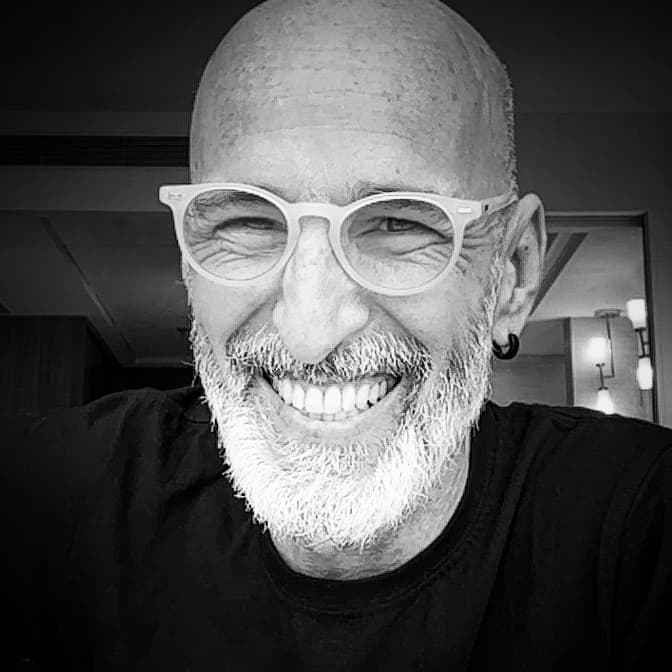
Written by Sephi Bergerson, industrial photographer specialising in manufacturing and industrial environments.
Answers in this hub are written from direct experience shooting inside live industrial, manufacturing and technical environments.
Have more questions?
Have a question about industrial or corporate photography? Ask it here.